A good City Tour of Dubai is not about visiting the maximum number of attractions.
It is about visiting the right places in the right order.
Dubai is geographically spread out. Old Dubai, Downtown, Jumeirah, Palm Jumeirah and Dubai Marina are not concentrated in one compact sightseeing district. A poorly planned itinerary can therefore spend too much of the day moving between locations and too little time actually experiencing them.
This is why visitors who try to copy a random list of Dubai attractions often end up with an unrealistic schedule.
Burj Khalifa at 9:00 AM.
Gold Souk at 10:00 AM.
Palm Jumeirah at 11:00 AM.
Dubai Marina at noon.
Back to Downtown for lunch.
On paper, that looks productive.
In practice, it creates unnecessary backtracking.
A properly designed City Tour of Dubai should instead connect nearby areas into logical sightseeing zones, account for walking and parking time, and decide in advance which places deserve a proper visit and which are better treated as photo stops.
This guide explains how to build that kind of tour.
Why Dubai Should Be Toured by Zones, Not by Attraction Lists
Dubai has several very different sightseeing districts.
The city’s heritage areas are concentrated around Dubai Creek, Deira and Bur Dubai, while many modern landmarks sit farther southwest around Downtown Dubai, Jumeirah, Palm Jumeirah and Dubai Marina.
Official Dubai tourism guidance itself separates experiences across these distinct neighbourhoods, including Old Dubai, Downtown Dubai, Palm Jumeirah and Dubai Marina.
That geography matters.
A practical tour should therefore think in clusters.
For example:
Zone 1 — Old Dubai
- Al Fahidi Historical Neighbourhood
- Dubai Creek
- Gold Souk
- Spice Souk
- Deira
Zone 2 — Downtown Dubai
- Burj Khalifa
- Dubai Mall
- Downtown Boulevard
- Dubai Opera area
Zone 3 — Jumeirah Coast
- Jumeirah
- Burj Al Arab photo stop
- Madinat Jumeirah area
Zone 4 — New Dubai
- Palm Jumeirah
- Dubai Marina
- JBR
Instead of jumping repeatedly between zones, a city tour should move gradually across the city.
That single decision can make the itinerary dramatically more efficient.
The Biggest Mistake: Trying to Enter Every Attraction
Visitors often confuse a city tour with an attraction-ticket itinerary.
They are not the same thing.
If you actually enter Burj Khalifa, explore Dubai Mall, spend time in Al Fahidi, shop at the Gold Souk, walk Dubai Marina and visit Palm Jumeirah attractions in one day, the schedule can quickly become unrealistic.
Some destinations should be experience stops.
Others should be orientation stops.
And some should simply be photo stops.
A successful City Tour of Dubai needs all three.
Experience Stops
These are places where you intentionally spend meaningful time.
Examples might include:
- Al Fahidi Historical Neighbourhood
- Dubai Creek
- Dubai Mall
- Burj Khalifa observation experience
- Dubai Marina
Orientation Stops
These allow visitors to see an area and understand its character without spending several hours there.
Examples:
- Downtown Boulevard
- Jumeirah
- Palm Jumeirah
Photo Stops
These are short stops designed around a landmark view.
Examples might include:
- Burj Al Arab viewpoint
- Dubai skyline viewpoints
- selected Palm Jumeirah locations
Once the itinerary distinguishes between these stop types, it becomes much easier to control the day.
A Smarter One-Day City Tour of Dubai
The following structure works because it moves broadly from historic Dubai toward the newer western side of the city.
It is not designed as an inflexible timetable.
Instead, it demonstrates how the route itself should be constructed.
Stop 1: Begin With Old Dubai
Starting in Old Dubai gives visitors something that a skyline-only itinerary cannot provide: context.
Dubai’s contemporary architecture is impressive, but understanding the city becomes more interesting when the tour begins around the trading districts and historic communities surrounding Dubai Creek.
Official tourism information highlights Al Fahidi Historical Neighbourhood, traditional souks and Dubai Creek as central parts of experiencing Old Dubai.
Al Fahidi Historical Neighbourhood
Al Fahidi gives visitors a very different visual environment from Downtown Dubai.
Instead of skyscrapers and multi-lane roads, the area is known for traditional architecture, courtyards, narrow lanes and wind-tower structures.
It deserves more than a drive-by.
Allow time to walk.
This is one of the stops where leaving the vehicle and exploring on foot adds real value to the city tour.
Dubai Creek
From the historic district, Dubai Creek naturally fits into the route.
The Creek was historically central to Dubai’s commercial development and remains one of the easiest places to understand the relationship between Bur Dubai and Deira.
Instead of treating the Creek merely as another photo location, visitors can incorporate an abra crossing into the itinerary.
That gives the tour a short experience rather than another vehicle-based viewpoint.
Gold Souk and Spice Souk
Once on the Deira side, the Gold Souk and Spice Souk can be combined into the same walking segment.
The mistake here is allocating too little time.
Markets do not work well as five-minute stops.
Even visitors who are not planning to shop need enough time to walk through the lanes, browse storefronts and regroup before continuing.
Why Old Dubai Should Usually Come Before Downtown
There is another practical reason to start here.
A city tour becomes more interesting when the visual progression changes throughout the day.
Old Dubai provides:
Creek → souks → traditional architecture
Then Downtown introduces:
boulevards → towers → modern cityscape
Later Jumeirah and Palm Jumeirah shift the atmosphere toward:
coastline → resorts → waterfront developments
Finally Dubai Marina provides:
high-rise waterfront living → promenade → evening city atmosphere
The tour therefore feels like a journey through different versions of Dubai rather than a random collection of landmarks.
Stop 2: Move Toward Downtown Dubai
After completing the heritage section, the itinerary can move toward Downtown Dubai.
Downtown is home to several of Dubai’s most recognizable attractions, including Burj Khalifa and Dubai Mall.
This is where itinerary discipline becomes important.
There is enough to do around Downtown to consume most of the day.
Trying to do everything will destroy the rest of the tour.
Instead, decide what kind of Downtown stop you want.
Option A: Exterior Sightseeing Stop
Best for visitors trying to cover more of Dubai in one day.
Possible activities:
- Photograph Burj Khalifa
- Walk part of Downtown
- Visit Dubai Mall briefly
- Take a meal or coffee break
Option B: Burj Khalifa Experience
If visiting an observation level is important, allocate a larger block of time.
Burj Khalifa is 828 metres high and remains the world’s tallest building, while timed visitor experiences operate within the tower.
Do not schedule a timed attraction casually between several short sightseeing stops.
Visitors need to account for:
- Arrival
- Entry procedures
- Walking through Dubai Mall
- Queuing
- The observation experience
- Returning to the pickup point
A supposedly one-hour attraction can therefore occupy a much larger part of the itinerary.
Do Not Underestimate Walking Time Around Downtown
This is one of the most common planning errors.
A driver may drop passengers relatively close to the destination, but that does not mean visitors instantly arrive at the attraction entrance.
Downtown includes large pedestrian areas and major destinations.
Your itinerary should therefore distinguish between:
Vehicle arrival time
and
Attraction arrival time
For a private City Tour of Dubai, this matters because the driver may need a different pickup point from the original drop-off point.
Agreeing on that location beforehand prevents passengers from finishing their sightseeing and then spending unnecessary time trying to locate the vehicle.
Stop 3: Use Jumeirah as a Scenic Transition
After Downtown, the route can begin moving toward the coast.
Jumeirah works well as the transition between central Dubai and Palm Jumeirah.
This part of the journey should not necessarily contain long stops.
Instead, it can focus on sightseeing from the vehicle combined with one or two selected photo opportunities.
Burj Al Arab Photo Stop
Burj Al Arab remains one of Dubai’s best-known architectural landmarks and is frequently included in tourism itineraries around the Jumeirah coastline.
For a general city tour, visitors usually do not need a lengthy stop.
A properly selected viewpoint and sufficient time for photos may be enough.
This is a good example of why city-tour planning should distinguish between seeing a landmark and fully visiting it.
Stop 4: Palm Jumeirah Should Not Be Treated Like a Small Roundabout
Palm Jumeirah often appears on city-tour itineraries as though it were simply a single landmark.
It is not.
It is a large man-made island containing hotels, residences, attractions and different viewpoints. Official tourism information describes Palm Jumeirah as one of Dubai’s signature destinations in its own right.
That creates an important planning question:
How much of the Palm does the visitor actually want to experience?
There are several possible approaches.
Quick Palm Orientation
Suitable for fast-paced city tours.
The objective is simply to travel onto the Palm, understand its scale and make one selected stop.
Scenic Palm Visit
Allows additional time for views and photography.
Attraction-Based Palm Visit
If visitors intend to enter a major attraction, resort or viewpoint, the Palm should become one of the primary stops of the day rather than a brief addition.
Again, the difference is important.
Trying to combine a major Palm attraction with five other long visits creates schedule pressure.
Stop 5: Finish Around Dubai Marina
Dubai Marina is particularly useful as the final major stop because it offers a different atmosphere from Downtown.
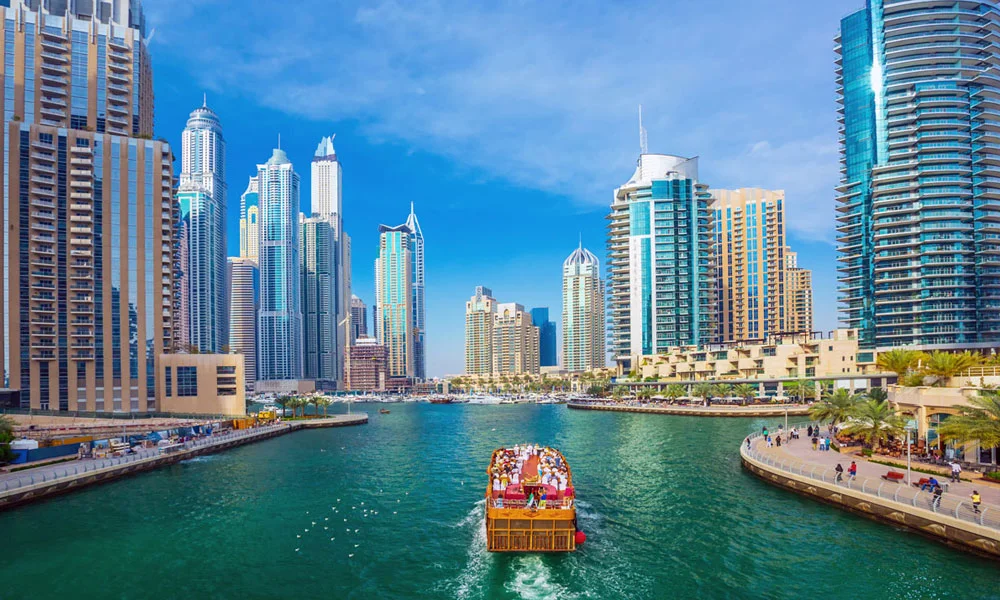
The district combines towers, waterways, Marina Walk, restaurants and access to nearby JBR. Official tourism guidance describes Dubai Marina as a waterfront neighbourhood with skyscrapers, leisure activities and extensive walking areas.
It also tends to work well later in the day.
Visitors can walk rather than immediately getting back into the vehicle.
Possible activities include:
- Marina Walk
- Waterfront photography
- Dinner
- JBR extension
- Boat trip
- Café stop
This creates a more relaxed finish than ending the day with another quick roadside photo stop.
A Practical Full-Day Route
A workable route could follow this sequence:
Hotel pickup
↓
Al Fahidi Historical Neighbourhood
↓
Dubai Creek / abra crossing
↓
Gold Souk and Spice Souk
↓
Downtown Dubai
↓
Burj Khalifa / Dubai Mall
↓
Jumeirah
↓
Burj Al Arab photo stop
↓
Palm Jumeirah
↓
Dubai Marina
↓
Hotel drop-off or dinner destination
The advantage is not simply that these attractions are famous.
It is that the overall route moves progressively through Dubai instead of repeatedly crossing the city.
How Long Should a City Tour of Dubai Actually Take?
There is no universal correct duration.
The answer depends on the number of genuine stops.
However, visitors should be skeptical of itineraries promising a large number of attractions in a very short period.
Seeing something through the vehicle window is not the same as visiting it.
A short city tour can provide orientation.
A longer tour can provide actual exploration.
4-Hour Tour
Better for a specific section of Dubai.
For example:
Old Dubai + Downtown
or
Jumeirah + Palm Jumeirah + Marina
Trying to cover the entire city in detail within four hours usually results in too much driving and too little exploration.
6-Hour Tour
Allows several meaningful stops while still requiring prioritization.
8-Hour Tour
Better for visitors who want a broader overview combining historic and modern Dubai.
Full-Day Custom Tour
Useful when visitors want a slower pace, meal stops, attraction tickets or a more flexible schedule.
The important principle is simple:
Increase time before increasing stops.
Private Vehicle or Public Transport for a Dubai City Tour?
Dubai has a substantial public transport network.
The Roads and Transport Authority lists Red and Green Metro lines plus the Dubai Tram, with stations serving areas including Downtown, Deira, Dubai Marina and JBR-related districts.
Public transport can therefore work well when visitors are exploring only a few connected areas.
But sightseeing across several districts is a different problem.
A one-day tour may involve:
- Walking to stations
- Transferring between lines
- Waiting
- Finding taxi connections for locations not directly beside stations
- Carrying shopping
- Coordinating children or elderly passengers
For independent travelers who enjoy exploring slowly, this may be perfectly acceptable.
For groups trying to cover Old Dubai, Downtown, Jumeirah, Palm Jumeirah and Marina in one day, private transportation can simplify the movement considerably.
When Bus Rental Dubai Makes Sense for City Sightseeing
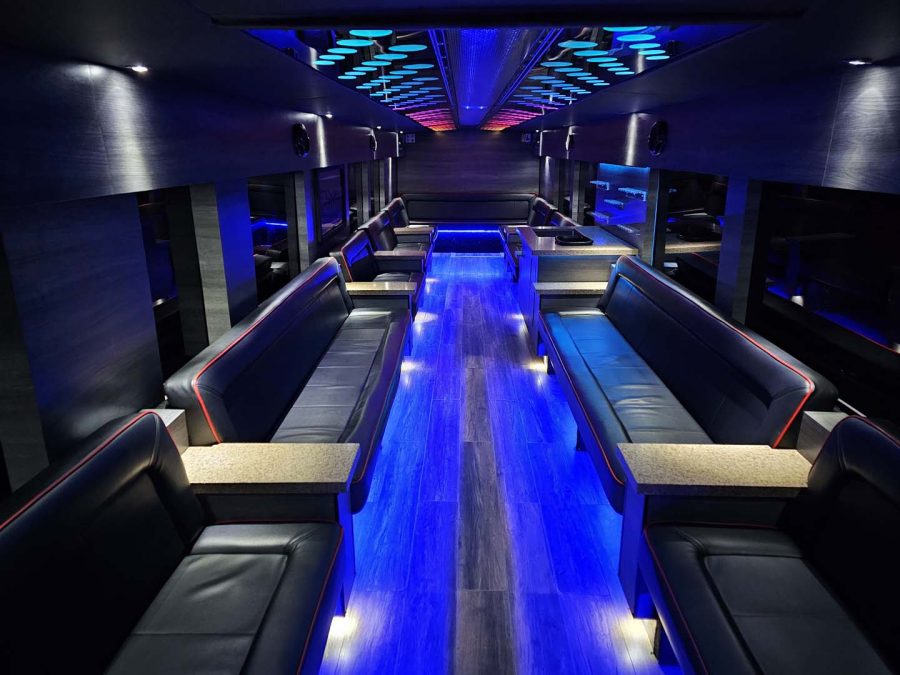
A private Bus Rental Dubai service becomes useful when the group is too large to travel comfortably in one or two cars.
Typical groups include:
- Families traveling together
- Corporate visitors
- Conference delegates
- Tour groups
- Wedding guests with free sightseeing days
- Educational groups
- International delegations
The major benefit is not simply seating capacity.
It is keeping the group synchronized.
Without group transportation, one part of the party may arrive earlier, another may take a different route, and another may struggle to identify the meeting point.
A bus gives the tour one transport schedule.
Mini Bus Rental for Smaller Dubai Tour Groups
For medium-sized groups, a mini bus rental may be more practical than a full-sized coach.
This is particularly useful for:
- Extended families
- Small business teams
- Friend groups
- Private tour groups
A minibus can combine group transportation with greater flexibility.
However, organizers should still consider shopping bags, baby equipment, wheelchairs or other belongings.
Sightseeing often creates more luggage during the day than passengers started with.
Car Rental With Driver for Families and Small Groups
A car rental with driver works well when the group is small enough that a bus would provide unnecessary capacity.
It can be particularly suitable for:
- Couples
- Families
- Business travelers
- Three or four-person sightseeing groups
- Visitors with flexible itineraries
The key advantage is the ability to change the route without repeatedly arranging transport.
If passengers spend longer than expected in Old Dubai, lunch can be delayed.
If Downtown becomes crowded, another stop can be prioritized.
This flexibility is difficult to achieve when every journey is booked separately.
Chauffeur Hire Dubai for Premium Private Touring
A Chauffeur Hire Dubai service suits visitors who prefer a private vehicle and a schedule centered around their own pace.
The service can be especially relevant for:
- Executive visitors
- VIP guests
- Couples
- Premium family travel
- Business travelers with limited free time
A chauffeur-driven city tour can also combine sightseeing with other obligations.
For example:
Hotel → business meeting → Burj Khalifa → lunch → Palm Jumeirah → Dubai Marina → hotel
This works differently from a fixed group sightseeing tour because the itinerary is organized around the passenger’s schedule.
The Most Important City-Tour Rule: Do Not Zigzag
Imagine this itinerary:
Dubai Marina → Gold Souk → Palm Jumeirah → Al Fahidi → Burj Khalifa → JBR
All the locations are worthwhile.
The route is terrible.
The vehicle repeatedly crosses large sections of Dubai.
A geographically organized itinerary might instead be:
Gold Souk → Al Fahidi → Downtown → Jumeirah → Palm Jumeirah → Dubai Marina → JBR
The attractions are almost the same.
The experience is completely different.
This is why route order deserves as much attention as the attraction list.
Build Your Dubai City Tour Around Three Priorities
Before creating the itinerary, every visitor should choose three priorities.
For example:
Visitor A
Priority 1: History
Priority 2: Architecture
Priority 3: Photography
Recommended emphasis:
Old Dubai → Creek → Downtown → Jumeirah → Marina
Visitor B
Priority 1: Burj Khalifa
Priority 2: Shopping
Priority 3: Palm Jumeirah
Recommended emphasis:
Downtown → Jumeirah → Palm Jumeirah → Marina
Visitor C
Priority 1: Culture
Priority 2: Food
Priority 3: Traditional markets
Recommended emphasis:
Al Fahidi → Creek → Deira → selected modern Dubai stop
There is no reason every traveler should follow the same itinerary.
City Tour of Dubai for Families With Children
Families should usually reduce the number of stops.
Children experience the city differently from adults checking landmarks off a list.
Long periods of:
vehicle → photo → vehicle → photo → vehicle
can quickly become tiring.
A better family itinerary might combine:
- One heritage area
- One major attraction
- One scenic stop
- One relaxed waterfront destination
For example:
Al Fahidi
↓
Downtown Dubai
↓
Burj Al Arab photo stop
↓
Dubai Marina
This provides variety without turning the entire day into transportation.
City Tour of Dubai for First-Time Business Visitors
Business travelers often have the opposite problem.
They may have only four or five available sightseeing hours.
Trying to see everything is unrealistic.
Instead, the tour should provide a rapid understanding of Dubai’s contrasts.
A compact route could combine:
Old Dubai
↓
Downtown
↓
Jumeirah
↓
Palm Jumeirah or Marina
This gives the visitor heritage, commercial Dubai, iconic architecture and modern waterfront development without pretending to be a complete city experience.
Morning or Afternoon: When Should the Tour Start?
The correct start time depends on the itinerary.
Morning Start
Works particularly well for:
- Old Dubai
- Heritage walking
- Markets
- Longer full-day routes
Starting early also gives the itinerary more recovery time if one stop runs longer than expected.
Afternoon Start
Can work better for visitors focusing on:
- Jumeirah
- Palm Jumeirah
- Dubai Marina
- evening waterfront experiences
A late start is less suitable when the objective is to cover both Old Dubai and New Dubai comprehensively.
Do Not Schedule the Airport Transfer Like a Sightseeing Stop
Some visitors attempt to turn the arrival or departure transfer into a complete city tour.
This can work only when enough time exists.
A passenger with an evening flight should not schedule multiple attractions immediately before airport check-in.
Similarly, tourists arriving after an overnight flight may not enjoy a long sightseeing itinerary before reaching their hotel.
For airport-day sightseeing, keep the tour compact and include substantial time buffers.
Allow Time for Boarding a Group
A 30-person group does not move like two passengers.
At every stop, people need to:
- Return to the vehicle
- Find their seats
- Confirm nobody is missing
- Store belongings
- Board safely
If this takes ten minutes across six stops, an entire hour can disappear simply through boarding.
Group itineraries therefore require fewer stops and larger buffers than private-car itineraries.
This is particularly important when using Bus Rental Dubai services for tours.
Lunch Should Be Part of the Route
Another overlooked issue is meal planning.
If the restaurant is in the opposite direction from the next attraction, lunch can cause a major detour.
Instead, position the meal naturally within the route.
Examples:
Old Dubai → lunch near Creek → Downtown
or
Downtown → Jumeirah lunch → Palm Jumeirah
or
Palm Jumeirah → Dubai Marina dinner
Meals should support the route rather than interrupt it.
Photo Stops Need Time Limits
Photo stops sound short.
They rarely are.
Passengers leave the vehicle.
Someone needs another picture.
Another person visits a nearby shop.
Someone else cannot find the pickup point.
A planned 10-minute stop becomes 30 minutes.
For group tours, clearly distinguish:
10-minute photography stop
from
45-minute exploration stop
This gives passengers realistic expectations before leaving the vehicle.
What to Tell Your Transport Provider Before the Tour
A custom city tour becomes much easier to organize when the transport provider receives the actual itinerary beforehand.
Provide:
- Passenger count
- Hotel
- Pickup time
- Desired tour duration
- Priority attractions
- Attraction tickets already booked
- Meal requirements
- Children or elderly travelers
- Planned ending location
- Number of luggage items if checking out of the hotel
- Any accessibility requirements
If a timed ticket is already booked, make that stop the anchor around which the rest of the tour is built.
A Better Way to Design Your City Tour
Instead of asking:
“How many Dubai attractions can we visit?”
ask:
“Which combination of places will show us the greatest variety without making the day exhausting?”
That changes the entire itinerary.
A thoughtfully planned City Tour of Dubai might include only six important locations and feel complete.
A poorly designed tour might include twelve locations and leave passengers remembering mainly the inside of the vehicle.
Final Thoughts
Dubai deserves more than a checklist.
Its appeal comes partly from the contrast between places that feel completely different from each other.
Around Dubai Creek and Al Fahidi, visitors experience the city’s historic trading environment and traditional neighbourhoods. In Downtown Dubai, the scale changes dramatically with Burj Khalifa and the surrounding modern district. Jumeirah introduces the coastline, Palm Jumeirah demonstrates the ambition of Dubai’s large-scale developments, and Dubai Marina provides an entirely different waterfront skyline. The best City Tour of Dubai connects those contrasts intelligently.
For larger groups, Bus Rental Dubai can keep the itinerary coordinated. Medium-sized groups may prefer a mini bus rental, while couples, families and small parties can use a car rental with driver for greater flexibility. Visitors seeking private executive-style transportation may instead prefer Chauffeur Hire Dubai.
Whatever transport option is selected, the principle remains the same:
Do not design the tour around the longest attraction list. Design it around geography, available time and what the traveler genuinely wants to experience.
That is how a single day in Dubai becomes a meaningful city tour instead of a race between landmarks.